Because I Said So

As we approach Mother’s Day this weekend, I am reminded of the many Mom-isms that I heard while growing up. “Don’t sit so close to the TV. You’ll ruin your eyes.”  “Don’t run with scissors.” “Put on some lipstick. You need some color.” “Wear clean underwear in case you get in an accident.” And of course, the ever-popular definitive answer to my question “Why (or why not)?”  — “Because I said so.”

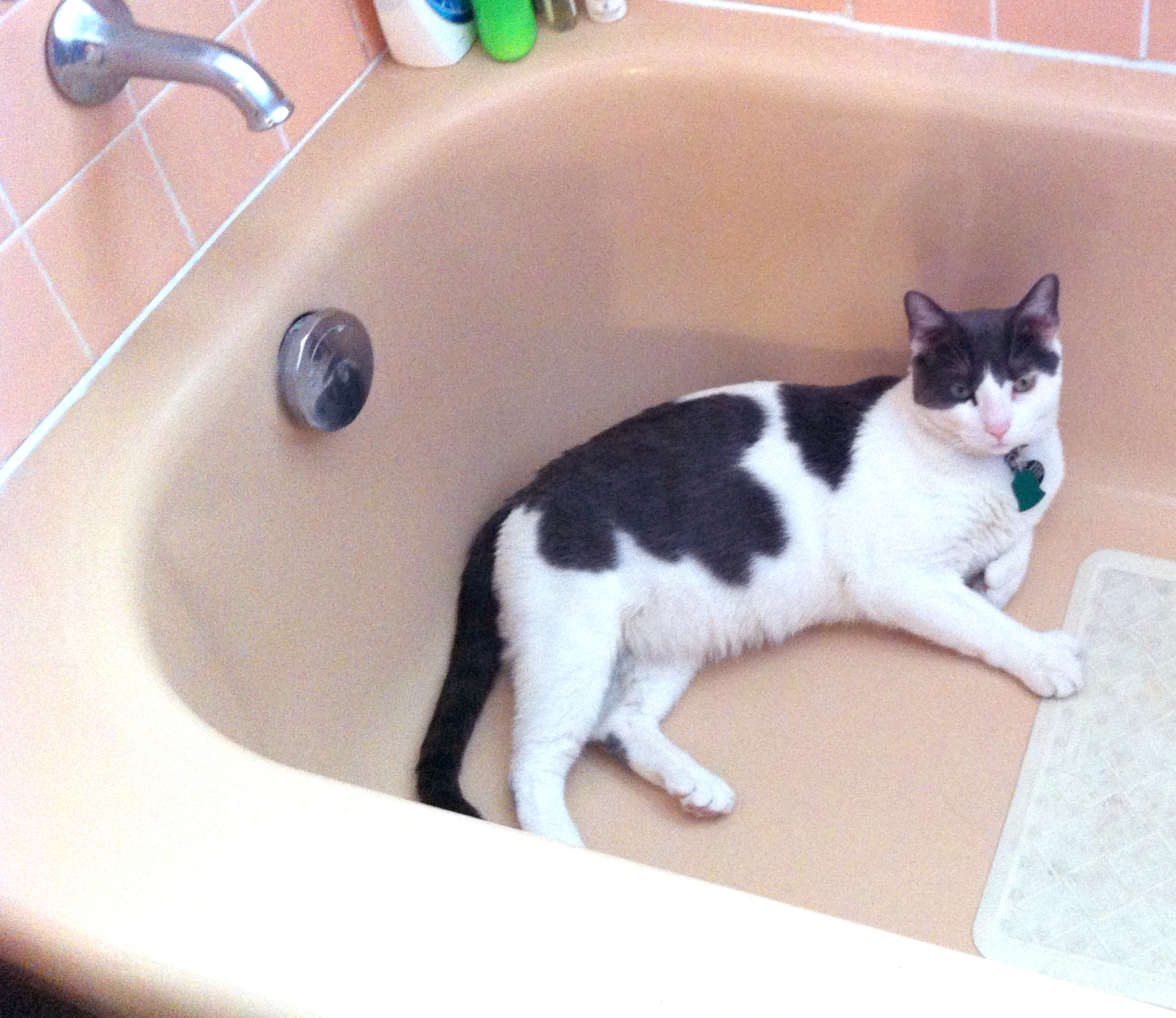
This morning, I awoke to find my cat sound asleep in the bathtub (there was no water involved). Usually tub beds are reserved for romantic comedies when a couple is forced to share a hotel room and the man wants to be chivalrous…or for the inebriated individual who isn’t ready to wander far from toilet.  But no one ever told my cat that the bathtub is not a place to sleep. So when I told him that the bathtub was not a cat bed, he looked up at me as he curled against the cool porcelain, and happily posed the challenge, “Says who?”

Now, I could have responded with a “Says me,” or “Because I said so.”  But he was right. What’s wrong with bucking convention? Who makes these silly rules anyway?  For instance, I regularly eat foods for breakfast that “they” have deemed dinner fare. I don’t always eat a slice of pie starting from the pointy end.  I use chopsticks incorrectly (I cross them — my great-grandmother is turning in her grave)…in my left hand.  (Yes, I know. I’m ashamed.) 

In his last lecture before he passed away from pancreatic cancer, Dr. Randy Pausch, a computer science professor at Carnegie Mellon University, spoke about “Really Achieving Your Childhood Dreams” and enabling the dreams of others. His parents let him paint his aspirations on his bedroom walls when he was in high school. And why not? Sure it was unconventional, but it was just paint. Yet it meant so much to him. And he begged other parents to follow suit if they received the same request.  So, when our daughter asked to paint her bedroom door like the entrance to J. R. R. Tolkien’s Mines of Moria, we said “Go for it.” And it turned out to be magical. (Her final, remaining step is to go over the elvish writing with glow in the dark paint.)  It made her happy. It didn’t hurt anything, and it’s actually quite  beautiful.

So before I say “no” or “because I said so,” I try to ask myself:

  • Is it illegal?
  • Could someone get hurt physically, emotionally, financially?

If the answers are “no,” then I also ask myself “Will it help someone or bring joy?” If the answer is “yes,” then the real question is then “Why not?”

My daughter sometimes prefers to camp out on her floor next to her perfectly comfortable bed.  Why not?

My son likes to use the engineering genes he inherited from my husband to build all kinds of dynamic contraptions (and attach them to his bicycle). Why not?

My cat wants to sleep in the bath tub.  Why not?

Don’t let someone tell you why you can’t do something. Surround yourself only with people who love and support you. Try something new. Something unconventional. Something different. Ask yourself today, why not? Because I said so.


Yearbook Portrait: Fact or Fiction?

Disclaimer: Not my actual daughter.

As we close in on the end of the school year, students anxiously await the arrival of the yearbook. Picture Day earlier in the year was an adventure. The night before, my daughter carefully planned her outfit, accessories, hair and make up for the big day that would generate an image to be immotalized in the yearbook and on her student ID/library card.

She has inherited my husband’s hair, which means it has a mind of its own, rebelling against humidity by curling and frizzing. Picture Day was a humid day.

But so what?  Even with some fly-away strands, she looked gorgeous in her jewel-colored shirt with matching necklace and earrings. But I would think she is beautiful wearing no makeup  and sporting a house elf’s dirty pillowcase. Her sometimes-Hermione Granger-frizzy hair is part of who she is, and I love her that way.

Besides, it could be worse. When my husband was in elementary school, he, too, had a Picture Day. But he forgot about it. So no carefully chosen shirt and tie. No tidy Alfalfa hair style. And to make matters worse, his photo sitting took place right after phys ed.  So there he was in a ratty T-shirt, uncombed hair, and all sweaty from gym. Now I didn’t know him back in elementary school, but I’ve seen that look many times since: after mowing the lawn, working on his vintage motorscooters, cutting down trees. To me that school photo more accurately captured my hubby than any other photos in unnaturally spiffed-up clothes with an uncomfortable, forced smile. Granted, I think most parents would prefer that their children appear in their Sunday best for photos. My mother-in-law said she was horrified when she saw the picture of her unkempt son, yet that photo has become the subject of one of her favorite stories to retell.

So who are we? The shiny, happy people (thank you, R.E.M.) who appear in portraits? Or the wacky, imperfect folks in the candid (and sometimes, formal) shots?  Are we the accomplished, carefree Facebook personae? Or real people with flaws, fears and problems?

It’s easy to compare ourselves with Photoshopped images of perfection and feel that we don’t measure up. Or to read tweets and posts about how wonderful life is for people we think we know…and we think our lives are lacking. A line from one of my favorite poems, Desiderata, says “If you compare yourself with others, you may become vain or bitter; for always there will be greater and lesser persons than yourself.”  The fact is that most people want to put their best foot forward in a public forum. I know I wouldn’t want to wear my heart on my sleeve or air my dirty laundry on my Facebook page. We’d probably be surprised to learn that everyone has real lives behind the posts and photos, and they are not all perfect and painfree.

I would rather see a yearbook comprised of candid photos that show the true personalities of the kids. Those are the people we will remember in decades to come. I’ve heard it said that the true test of character is what you do when you don’t think anyone is looking. Take for example, the older couple who unwittingly recorded themselves on a webcam as they were trying to figure out how to use their new computer. The video captured their love, innocent sweetness and sense of humor that they might not have shared if they knew they were being observed.

Be the person you are when no one is looking. And say “cheese.”

Ramp Up Your Happiness

Outside our local bank is a ramp for wheelchair access and for those who can’t or don’t want to take the stairs.  It slopes to the right, turns 180 degrees, and returns to the left, ending in the parking lot sidewalk.  When my children were toddlers, they loved that ramp.  It didn’t matter that it took longer to run down the ramp than it did to walk down four steps. All that mattered was that it was fun to race freely down the ramp. Sometimes they would hold their arms out like airplane wings and fly down. They also wanted me to walk down the steps and meet them at the bottom so they could zip down the ramp all by themselves, coming to a slamming halt with a hug and a giggle. This simple ramp made them so happy.

When I was visiting the bank last week, a Mom and her young son were exiting the bank. Like I did with my kids so many times, she let her son run down the ramp and met him at the bottom. He was delighted.

How often do we have the opportunity to stop and smell the roses or run down a ramp, but we don’t, because we don’t think we can take the time? Here are a few things you can do that don’t take a lot of time, but could bring joy to your life and to someone else’s — and they don’t cost anything but a few minutes of your day!

  • Read something uplifting, whether it’s an inspirational quote, a daily devotional or an internet post; here’s one of my new favorite sites: Know Your Glow. It’s a female-targeted site, but it has some great thoughts for everyone.
  • Take two minutes to sit in silence, breathe slowly and clear your mind: meditate, pray, gather your thoughts, get centered — whatever you choose to call it.
  • Give someone a warm hug.
  • Read to a small child (yours, a niece, nephew, neighbor).
  • Play with your cat, dog or other pet (wiggle a string, toss a ball). They will love it, and you will benefit, too, with lower blood pressure and a relaxed heart rate. And if you don’t have a pet, consider adopting one from a local shelter.
  • When you ask someone how their day was, really listen to the answer.
  • Watch the sun rise, and be thankful for another day and a fresh start.
  • Eat dinner with your significant other, your family or a friend. At the very least, sit at your dining table with the television off and eat a healthy meal — don’t stand at the kitchen counter wolfing down a bag of chips.

Let’s take time and find the ramps in our lives — slow down and take a moment to have a little fun, before the time comes when we no longer have the opportunity. What is your “ramp?”

Plan to Be Surprised

“Life is what happens to you while you’re busy making other plans.”
~ John Lennon

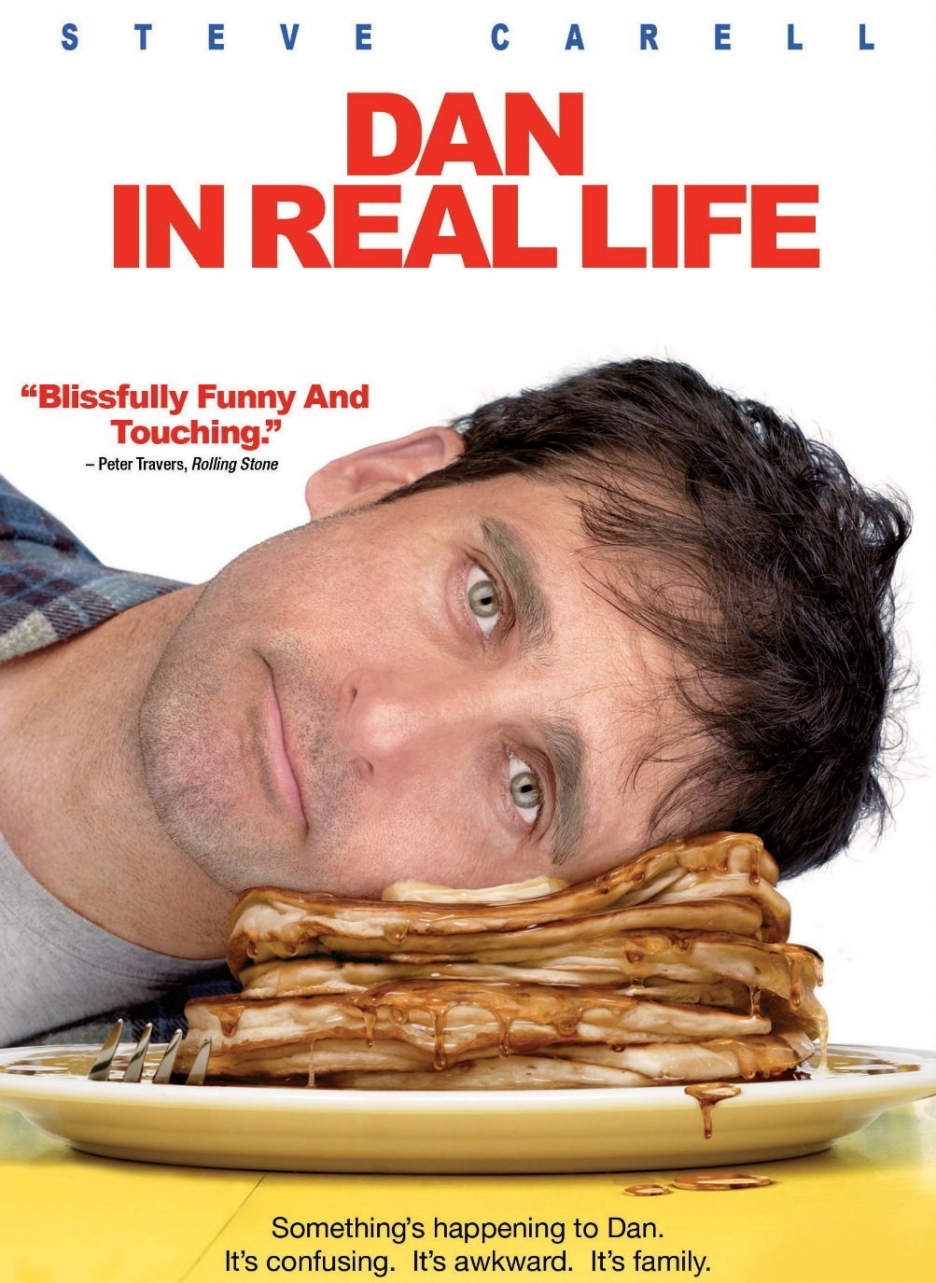
One of my favorite movies is the comedy Dan in Real Life. The trailer for the film was awful. It wasn’t funny and did nothing to explain what the movie was about. If I hadn’t stumbled upon the film while cable channel surfing one day, I would never have discovered what a delightful film it truly is. Here’s a quick synopsis. Dan (played by Steve Carell) is a widower and father of three young girls who are growing up fast. He writes an advice column about parenting and family life although his own family is a bit dysfunctional. While at a reunion, he and his brother’s new girlfriend unintentionally fall in love, and the chaos begins. The situation is made all the more challenging because he tries to keep his feelings secret. Ironically, relatives of all ages try to give him guidance on finding love. At the end of the film, Dan offers this advice about “life plans…we hope that our kids make good, smart, safe plans of their own. But if we’re really honest with ourselves, most of the time, our plans don’t work out as we hoped. So instead of asking our young people, ‘What are your plans? What do you plan to with with your life?’ Maybe we should tell them this: ‘Plan to be surprised.’”

People who know me know that I like to plan. One of the most common questions I ask is, “What’s the plan?” And while I don’t have a complete aversion to spontaneity, I do like having a sense of what to expect in all situations. I love spreadsheets and use them to budget, to lay out travel lists so I don’t forget anything, and to map out activities. I don’t particularly like surprises — especially surprise parties. I detest the idea of being scared by people leaping out from behind furniture, or attending a party when I’m not dressed properly (at least in my mind).  Maybe it’s because of my introverted nature. I don’t like big crowds, so the last thing I want is to be surrounded by a large group even if they are friends and well wishers. And if I do have to be in a big group, I need time to mentally prepare myself. Again…the planning.

The years have taught me that when things don’t go as planned, it’s not always a bad thing. For instance, I never planned on living in New York. In fact, it was the last place I ever thought I’d live. New York City is crowded, dirty, and the people are abrupt and obnoxious — well, some of them. But here I am, a resident of the Empire State for more than two decades now, with a business of my own, amazing children, a wonderful school district, and great neighbors. I can’t say that I planned this, but it has turned out better than expected.

This next phase of life, the transition of kids leaving the nest, is hard for me. While we have been planning for the mechanics of college (SATs, applications, campus visits, scholarship forms), I didn’t plan on the emotional toll it would take. I keep counting the “lasts”:  last first day of school, last concert, last prom, last parent-teacher conference. But my friends who have been through it are quick to point out that there are a world of incredible “firsts” yet to come. I just need to look forward and not backward, and plan on being pleasantly surprised.

So while I’m still a student of the surprise-based life, I’m planning on getting better at it.

Are You a Crazy Old Person?

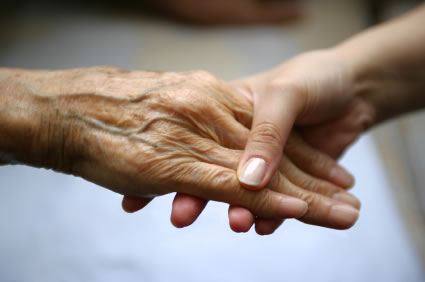
holding hands old and youngWhen I was 15, I had to spend an extended stay in a military hospital in Texas. Because I was going to be there for a while, the nurses spared me from a bed in the open ward and told me I could have a semi-private room. The only catch was that my roommate would be a woman they called Crazy Sally. “Why do you call her that?” They explained that she was old, and she rambled a lot, and sometimes screamed at night. Great.

Still, the benefits of a semi-private room outweighed my trepidation.  My new, old roommate had recently had surgery and was having some trouble with her meds. By the time I settled into my new bed, Sally had settled as well. Crazy Sally wasn’t so crazy after all. Because I had become somewhat of a fixture on the floor, many of the nurses knew me and would stop in to chat, but they sort of dismissed Sally…so I talked to her. Sally was probably in her late 70s. She had joined the WAFs (Women in the Air Force) at a time when it was rare to find females in uniform.

Sally’s body may have been aging, but her mind was still incredibly sharp. In the late afternoons, after her nap, Sally would recount the most amazing tales of her overseas tours of duty. My favorite story was of a dinner in opulent surroundings that she and three other WAFs shared with a visiting Sheik. She didn’t have any family to visit her in the hospital, so I became her granddaughter for a time. She was happy to share her adventures with me, and I was thrilled to listen. The staff missed a great opportunity to get to know this wonderful woman.

We’ve all met people like Sally. Maybe it’s a grandparent or an elderly neighbor who tells a story we’ve heard a dozen times. But the next time you hear the beginning of that same old story from the war, or the old country, or about walking to school barefoot in the snow…uphill…both ways…for 10 miles, please don’t roll your eyes and tune out. You are experiencing an ancient oral and aural tradition. That’s how stories were passed down and learned:  by repetition. Most people don’t write down their life stories. They pass them down to their families by speaking the words. Treasure those moments and be thankful you get an opportunity to hear the story again. And be sure to remember all the details so you can share it with someone else.

Now that I’m older, I understand the desire to share what I’ve learned. I want to help younger generations avoid pitfalls and hurt. But all they want to do (as I did when I was their age) is figure it out for themselves. I remember as a toddler defiantly telling my parents, “I want to do that by myself.”  (I hear those words echo from my children’s mouths all the time.) Did I touch the hot stove? Yes. Did I burn my finger and cry? Yes. Was I able to convince my own children not to touch a hot stove? Of course not.

I also hear my mother’s voice in my head saying “Just wait until you have children of your own.” Yes, Mom. I get it now.

Perhaps I was blessed with just a modicum of extra enlightenment in my youth that helped me appreciate the words of my elders even back then. I can only pray that at least a small percentage of the knowledge and experiences I try to impart to the young ones is taken to heart and can make their lives just a little easier or painless. We “old people” really do have some valuable knowledge to share sometimes. Please ask. And listen. I try to do that everyday.

I leave you with this lovely poem I recently saw posted on Facebook:

I Am Not Old

I am not old, she said
I am rare

I am the standing ovation
at the end of the play

I am the retrospective
of my life
as art

I am the hours
connected like dots
into good sense

I am the fullness
of existing

you think I am waiting to die
but I am waiting to be found

I am a treasure
I am a map
these wrinkles are imprints
of my journey

ask me
anything.

~ Samantha Reynolds

Mouse vs. Cats – You Decide

Around 4:00 am, there was a lot of activity going on in our bedroom…under the bed. Instead of chasing each other, my cats were clearly after some other prey.  Very few rodents have ever managed to get into our house, much less survive a night with three cats on the prowl. One adventurous (or stupid) mouse decided to brave the gauntlet, and was now scurrying around my bedroom floor. I looked over the edge of the bed, and saw Claire lunge under the night table, emerge proudly with the wriggling little furball in her mouth, then trot off to the livingroom with her prize.

So now what? I could go back to sleep and let the cats do what cats were born to do — continue to hunt and play with the mouse until they killed it…and maybe ate it. But pragmatically, I didn’t want the mouse dying somewhere hidden, relying only on the odor of decay to reveal its whereabouts days later. (I’ve experienced that before. Trust me, it’s not pleasant.) And from a humanitarian standpoint, I didn’t want the cats to kill the furry creature (it is cute, despite the fact that mice are vile vermin).

I got up.

Claire had dropped the mouse on the carpet and was letting it try to escape over and over before she grabbed it again–just toying with it. The other two cats were waiting to pounce if it ran in their direction. I had the power to save the mouse. Its fate rested in my hands. I decided to catch and release. Using the tried and true method of throwing a plastic bowl over the mouse and sliding a piece of cardboard underneath, I scooped up the little guy and liberated him out the front door — much to the disappointment of the kitties.

It’s a big responsibility being given power over another life.  That person or creature needs to trust you will make the best decision. How many times have we seen the reminder from animal shelters that saving one animal’s life may not make a big difference, but it certainly makes a difference to that one animal? Sure, it’s a mouse today. But tomorrow it might be your pet, or even your spouse or parent.

And how many times do we feel like the mouse? All pathways seem blocked by insurmountable obstacles. What can we as little mice do?  We have to have faith that there is a bigger person with a giant plastic bowl who will shield us and ‘deliver us from evil’ felines. Sometimes we just have to let go and trust a higher power.

I believe I did the right thing this morning. And who is to say the little rodent won’t find its way back in the house, and next time I might not be around to help? Let’s hope it’s smart enough to stay outside. But that’s how free will works.

As my son finishes his last year in high school, my kids are frequently on my mind. They are a little bit like the mice. We protect them; we scoop them up before they get hurt. But in time, we also need to release them into the wild and trust that they, too, will make the best decisions for themselves. Every choice we make, from what to eat for breakfast, or what college to attend, to whether or not to save a mouse, has an impact on someone.  Some choices will have a greater, farther reaching impact than others. The opportunity to make decisions is a gift, and each outcome sets us along a different path.

What important decisions will you make today?


Untrim the Tree

discarded Christmas treeSome people take down their tree and decorations the day after Christmas. In their minds, the holiday is over and it’s time to move on. In years past, we have taken down the tree and ornaments on January 2nd. It always makes me sad, but a crispy pine tree raining sharp needles, and empty gift boxes by the fireplace somehow seem sadder. I justify the rush to clean by telling myself and my children that if we left the decorations up year-round, it wouldn’t be as special when next Christmas comes around (although there is a Mexican restaurant in San Antonio, Texas, that might disagree).

However, this year, life got busy. Suddenly, every day seemed filled with school exams, sports practice, play rehearsals, and lots of work. So the tree and decorations remained up. I thought I would never have time to put things away, nor would I want to. The extra time with the colorful Christmas lights was warm and wonderful. But then about a week later, the tree just felt wrong. It didn’t belong in the house in mid-January. The garland seemed dusty. It was time. And somehow, it was not as sad taking it down now because the time felt right.

Maybe I’ve been forcing myself to put away the holiday ornamentation too soon. Ironically, I’m usually the one to hang on to things for sentimental reasons. I mean, it’s not like there is some kind of official deadline. Heck, the Three Kings didn’t even arrive in Bethlehem until nearly two weeks after Jesus’ birth. What’s the harm in keeping the ornaments up a little longer? In various parts of the world, trees stay up until January 6th, Three Kings Day or Epiphany. The date marks the arrival in Bethlehem of the three wise men, Caspar, Melchior and Balthasar, after a star guided them to the site of the newborn Christ child. Some cultures celebrate the day with bonfires (burning the Christmas trees), caroling or “star singing,” feasting, and the giving of yet more presents. Shopping malls haven’t figured out how to capitalize on Epiphany yet, but give them time…

So this year was a blessing in disguise. I didn’t overthink taking down the tree. In fact, the foliage stayed green and fresh longer than usual. I let things unfold on their own, and it just felt right. This is a lesson that I hope to apply to other aspects of my life:  relax, let go, worry less, and everything in its own time.

As we are reminded by a popular Bible verse (or a song by The Byrds, depending on your perspective):

 “To everything there is a season and a time to every purpose under heaven…
a
 time to keep, and a time to throw away…”

May the New Year bring you all you wish for…in time.

The Gift of a Child

There’s always that one moment on Christmas Day. As Karen Carpenter sang, “Greeting cards have all been sent. The Christmas rush is through.” The shopping for, or making gifts that I hoped my friends and family would love, is complete. All the other activities are done. Decorating. Baking. Holiday concerts. Parties. Wrapping. Unwrapping.  Assembling. Playing.

Then there’s that singular moment of quiet. Surrounded by torn wrapping paper, empty boxes, candy from stockings. That moment of peace and stillness when a family’s love is truly palpable, and we remember the meaning of the day. Two centuries ago, Christians were given the gift of a child — small, unassuming, yet life-changing.  Seventeen years ago, I was given that same gift (and again a few years later). My children have been the greatest gift I could ever receive. And they are the gift that keeps on giving.

Whether you are a parent, grandparent, aunt, uncle or just a family friend to a small child, I hope you can appreciate the gift that children represent.

  • My children are a built-in source of entertainment. I’m thrilled they inherited a humor gene. They make me laugh all the time.  This weekend, we were playing a board game where the players needed to complete popular advertising slogans.  Unfamiliar with the taglines, our kids substituted funny guesses. For Taco Bell’s “Run for the ____,” instead of “Border,” my son offered up “Bathroom” — which, if you’ve eaten too much spicy Mexican food, would be an apt slogan! On my daughter’s turn, she was given Nice ‘n Easy’s hair coloring’s slogan “The closer he gets___.” Instead of “…the better you look,” she suggested, “…the faster I run!”
  • We think we are here to teach them, but my kids teach me all the time. They reaffirm my faith in human beings when I witness their compassion for others. They teach me that I am stronger than I thought when I have to be strong for them. And sometimes, they teach me something new about my iPad — and for a techgeek like me, that’s saying something.
  • They are a gift of innocence and insight. If the world were run by children, we would all make friends quickly, forgive faster, and not be afraid to jump in with our whole hearts. Of course, we might also run with scissors, but that’s a small price to pay.
  • Children are a gift of patience. That might appear antithetical as it seems they can never wait — can’t wait for Christmas, can’t wait for their birthdays, can’t wait until they can drive, can’t wait until they graduate, can’t wait to grow up. But what they are really doing is helping us to be patient with them. As much as they are in a hurry to find their way and figure out who they are, we must be patient with them in order to guide them along the path to becoming the wonderful people they were meant to be.

Treasure the gift of children for they may not always be in our lives as they were when they were younger. Learn to let go, but always hold on to them in your hearts.

What’s With No Shave November?

This month, I noticed an exponential increase in scruffiness among my male friends.  The movement apparently started in Australia to raise awareness for men’s health issues, such as prostate cancer. Named Movember (“mo” for moustache), the event dictated that men would start with a clean-shaven face on November 1st, then cultivate the best-groomed moustache they could muster (no goatees, sideburns or beards allowed) by the 30th. It seems that American college boys have kicked this up a notch (or down, depending on one’s perspective) by growing whatever beard or moustache they can without regard to grooming, and the month has since been dubbed “No Shave November.” Sadly, it seems the cause-related aspect of the experience has been lost, and the event has deteriorated into a scraggly, facial free-for-all. Are these young men just looking for permission to be sloppy or lazy? And what about the ladies? Are they going “no shave” as well? What’s next? No bathing December?

If we’re going to give ourselves permission to be unkempt, I would much rather go broader. How about No Housecleaning November?  No Raking Leaves November? Or even No Laundry November?  And why limit ourselves to the eleventh month. Let’s spread this out. How about No Shoveling Sidewalks December (for our friends in the north)? No Resolutions January? And my personal favorite, No Income Tax April!

Maybe, if we pause momentarily from the stubbly frivolity, we can compile a list of No-s that can actually be helpful year-round.

  • No Ingratitude November – Especially during the month of Thanksgiving, we should make every attempt to be grateful for the blessings that we do have. Sometimes our personal troubles or business stresses cloud our vision, and it’s hard to be in a thankful mood every day. But remember that there are always those less fortunate than we are, and we should appreciate the blessings that we do have.
  • No Cruel Words November – The simplest, thoughtless words can be incredibly hurtful–even words said in jest. As my mother always said, “If you don’t have something nice to say, then say nothing at all.”
  • No Worrying November – This one is personally hard for me. I’m genetically predisposed to worry, but I’m making a conscious effort to not obsess on what might happen and to try to be more of a warrior than a worrier.
  • No Impatience November – Our patience is tasked every day, especially this time of year when people are rushing about preparing for the holidays. The lines at the stores may not move fast enough for you. Grid locked traffic delays your trip home. Take a deep breath and get centered. Look at your options. Can you shop online instead of in a store? Can you take a side street home? And if there’s nothing you can do, then there’s no sense wasting your valuable energy getting angry.
  • No Self-Loathing - As Eleanor Roosevelt said, “No one can make you feel inferior without your consent.” And if you’re the one criticizing yourself, you’re doomed. Lady Gaga (possibly the polar opposite of Eleanor Roosevelt) sings, “I’m beautiful in my way ’cause God makes no mistakes…Don’t hide yourself in regret. Just love yourself and you’re set.”

So this month, and every month, just say “no” to negative thoughts and actions. And if you insist on growing a wild beard well into December, let’s just hope your name is Santa Clause.


Four Ways to Deal with Embarrassment

“Man is the only animal that blushes — or needs to.” — Mark Twain

Whatever your political leanings, if you have a compassionate bone in your body, you have to feel (at least a little bit) for Texas Governor Rick Perry and his massive brain fart during a recent political debate when he completely spaced on the name of a government agency he wanted to eliminate. If it were me, I know my heart would have been pounding, the blood rushing to my face and my palms getting sweaty. One could make the case that such a gaffe is unforgiveable for someone who wants to be the leader of the most powerful country in the world. But putting that aside for a moment, it was a distinctly human — and humiliating — moment, and we’ve all been there at one time or another — granted, not in front of television cameras and millions of viewers and potential voters.

In college, while I was still a music major, I had to participate in a piano jury. It is as intimidating as it sounds. I was not judging my peers, no. A panel of music professors was judging me. I had to perform a piece by Haydn in three movements. In the middle of the third movement, I, too, had a shut down of the synapses. Although I had played the piece perfectly many times, the muscle memory in my hands failed me, and I complete blanked. All I could do was apologize, look sheepish, and leave the stage — face flushed, heart pounding. At least I didn’t have to relive my humiliation on national television over and over.

Embarrasing moments can range from the catastrophic to the everyday. There’s the tripping-on-the-sidewalk-and-hoping-no-one-sees scenario. I’ve done that, too, but with an armload of papers. Believe me, when hundreds of sheets of papers go flying, someone sees it. I’ve also, yes–this is true–slipped on a banana peel. What is it about banana peels that are so darned funny? Even in a scene from this week’s episode of The Big Bang Theory sitcom, Dr. Amy Farrah Fowler mentions that one of her “test monkeys slipped on a banana peel and broke his neck. It was both tragic and hysterical.” I guess you had to be there. But it’s funny. So back to my banana peel story. It was on my kitchen floor. All my family members deny culpability, and I don’t think the peel was abandoned on purpose. However, the fact remains that I slipped on it and ended up flat on my back. After my family confirmed that I was not physically injured too much, they had a good laugh–somewhat at my expense. And I had to admit (after applying ice to various parts of my body) that the circumstances were funny. Really. Who slips on a banana peel?

I’ve found there are ways not to deal with embarrassing situations (i.e. get upset; dig a hole, crawl in and never come out; sue someone), and there are four strategies that I’ve found helpful:

  1. Laugh about it. It’s important to be able to find humor in awkward circumstances, even our own. It diffuses the discomfort and you become part of a community of people who are all laughing together instead of it being you vs. them.
  2. Own the situation so it doesn’t own you. Working as stage manager at a concert one night, my son was asked to place four music stands on the stage during the concert. He was not given specific directions, so he spaced the stands evenly across the stage. While the audience waited, the orchestra conductor instructed him to push them all together. Again, without clear direction, he grouped the stands together, but not in the location where the conductor wanted them. Finally, on the third try (with clear direction this time), he positioned the stands in the right place. During the awkward silence from the audience, he faced the crowd and took a dramatic bow…and received thunderous applause. He could have sulked off the stage feeling scolded, but instead, he empowered himself to own and enjoy the moment, and the audience ate it up.
  3. Accept it and move on. There are times when the best thing to do is to not make a big deal out of it and move forward…like when you get sick to your stomach in a public place. And chances are, unless you are George Bush, Sr. becoming ill on the Prime Minister of Japan, no one will remember it.
  4. Learn something from it. I learned never to wear stiletto heels while carrying reams of paper and walking on cobblestones.

Governor Perry choose option #2. He chose to own his situation by posting on his website the survey question “What part of the Federal Government would you like to forget about the most?” What are some of your embarrassing moments, and how did you handle them?